
By Hillside Inc. | November 18, 2025

For many parents, it can be hard to witness their teen’s intense emotional outbursts or dysregulation. These episodes may seem unpredictable or disproportionate, leaving families feeling helpless or overwhelmed. However, it’s important to recognize that emotional outbursts are a normal part of adolescent development.
With the right understanding and strategies, parents will know how to help an adolescent with emotional issues navigate these turbulent years in ways that promote healthy emotional growth and build resilience for the future.
Recognizing Dysregulation in Teens and the Triggers of Emotional Outbursts
Before parents can respond effectively to emotional outbursts, it’s helpful to understand why they are triggered. Adolescence is a time of major brain growth and change. As puberty begins, a surge of hormones triggers the brain to reorganize itself. It removes unused connections, strengthens important ones and speeds up communication between brain cells. The teenage brain is still developing and the prefrontal cortex, the area responsible for emotion regulation and reasoning, is not fully developed until around age 25.
While these changes make the teenage brain especially flexible and able to learn, they can lead to strong emotions and new ways of thinking and reacting. When parents are aware of what these triggers are likely to be, they can better anticipate and address their child’s needs
Common Triggers
Understanding what sets off these intense reactions is the first step in dealing with the big display of emotions more adeptly. By recognizing the most common triggers, parents can better anticipate challenges and respond with empathy and support.
Some of the more frequent causes of emotional outbursts in teens include:
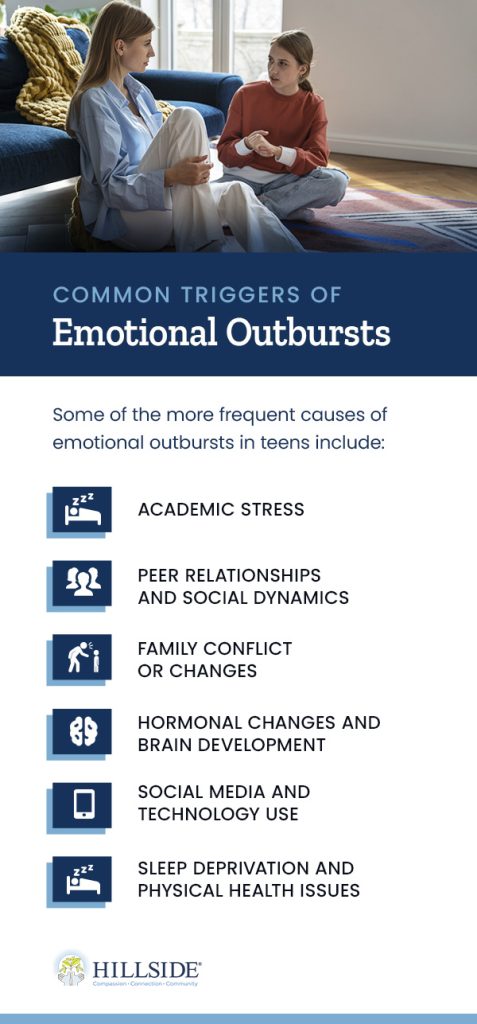
- Academic stress: Excessive academic stress triggered by tests, grades or college preparation can harm mental and physical health, leading to anxiety, frustration, headaches and fatigue. It can also lower academic performance and damage a teen’s self-confidence.
- Peer relationships and social dynamics: Experiences of bullying, exclusion or romantic disappointment can activate powerful emotional responses, as the brain’s reward and threat systems are closely tied to social feedback.
- Family conflict or changes: Major life events like divorce, moving or the arrival of a new sibling can disrupt a teen’s sense of stability. Adolescents may lack the coping skills to process these changes, leading to heightened irritability or anger.
- Hormonal changes and brain development: Fluctuating hormone levels can intensify emotions and reduce impulse control. Combined with ongoing brain development, this can make it difficult for teens to pause and reflect before reacting.
- Social media and technology use: Constant connectivity exposes teens to peer comparison, cyberbullying and information overload. The developing brain is particularly vulnerable to the emotional highs and lows triggered by online interactions.
- Sleep deprivation and physical health issues: Adolescents need more sleep than younger kids, but busy schedules and screen time often lead to chronic sleep deprivation. Lack of rest impairs emotional regulation and increases sensitivity to stress, while underlying health issues can further exacerbate mood swings.
By understanding these psychological and biological factors, parents can approach their teens’ emotional outbursts with greater compassion and insight, paving the way for more effective support and communication.
Recognizing Warning Signs
Recognizing the warning signs of emotional distress in adolescents is crucial for early intervention and support. One of the most noticeable indicators is a sudden shift in mood. Teens may become irritable, experience intense mood swings or withdraw from family and friends. These changes can happen quickly and may seem out of character, signaling that your child is struggling to manage their emotions.
In addition to emotional changes, stress often shows up physically. Adolescents might complain of frequent headaches, stomachaches or other unexplained aches and pains. These symptoms are commonly linked to emotional stress and can be a way for teens to express distress when they have difficulty putting their feelings into words.
Parents should also pay attention to changes in basic routines like eating and sleeping patterns. A teen who suddenly loses their appetite, begins overeating, has trouble falling asleep or sleeps much more than usual may be experiencing underlying emotional turmoil.
Noticing these warning signs early allows parents to offer support and provide anger coping skills for kids, which can open a healthier path forward.
Parental Insights
Parents play a crucial role in helping develop anger management for kids by staying observant and proactive. By taking a thoughtful approach, you can better understand what your child is experiencing and respond in ways that truly support their growth.
Consider these practical insights to guide your efforts:
- Keep a journal of outbursts to identify patterns or recurring triggers.
- Encourage open-ended conversations to help teens express their feelings.
- Understand that some triggers may be internal, like anxiety or self-esteem, and not always obvious.
Communication Strategies That Work
How parents communicate during and after an emotional outburst can make a significant difference in de-escalating the situation and building trust. Effective communication is not about “fixing” the problem immediately, but about creating a safe space for your teen to express themselves.
Here’s how to get started:
- Put away distractions and give your full attention. Use reflective statements like, “I hear you’re feeling really upset about…”.
- Acknowledge your teen’s emotions without judgment. For example, “It’s okay to feel angry sometimes.” It is possible to show empathy without losing authority.
- Model self-control by keeping your voice steady and maintaining open body language. Take a break if you feel overwhelmed, and return to the conversation when calm.
- Set boundaries by clearly stating which behaviors are unacceptable, while still validating emotions. Use “I” statements to express your own feelings and expectations.
- Collaborate on solutions once emotions have settled and encourage your teen to suggest coping strategies that work for them.
Coping Mechanisms for Parents and Teens
Managing unwanted emotions such as anger or sadness in teens is about building coping skills that parents and teens can use every day. These strategies help everyone in the family regulate their emotions, reduce stress and foster resilience.
For Teens
Teens can benefit from having a variety of healthy coping tools to manage strong emotions. Here are some anger coping skills for kids they can use to calm themselves and work through difficult feelings:
- Deep breathing: Practice slow, controlled breaths to calm the nervous system. Heading outside to blow bubbles, slowly and calmly, also counts.
- Mindfulness exercises: Use guided meditations or grounding techniques to stay present, manage anxiety and cultivate feelings of control and well-being.
- Healthy Sleep Habits: Having a healthy sleep schedule is one of the most impactful factors in maintaining emotional wellness.
- Physical activity: About 80% of adolescents do not meet the recommended levels of physical activity, which is about an hour of moderate-to-vigorous activity a day. Exercise can help release built-up tension and is important for overall well-being, from brain health to healthy weight and academic performance.
- Creative outlets: Art, music or hobbies provide alternative ways to express emotions and they’re linked to reduced stress and improved self-esteem and academics.
For Parents
Taking care of your own well-being is essential when helping kids manage their anger. Prioritizing self-care, like taking regular breaks, putting aside time for hobbies and accepting support from friends or professionals, can help you recharge and maintain perspective during challenging times.
Practicing mindful parenting means staying aware of your own emotional triggers and responses. By noticing when you’re feeling stressed or overwhelmed, you can pause and choose a calmer, more thoughtful reaction, which sets a positive example for your child.
Finally, modeling healthy emotional regulation is one of the most powerful ways to teach your teen how to manage frustration or disappointment. When you handle setbacks with patience and resilience, you show your child that it’s possible to cope with big feelings in constructive ways.
Building a Supportive Home Environment
A nurturing home environment is the foundation for emotional well-being. Families can strengthen their ability to handle anger in children by establishing healthy routines, open communication and positive feedback, which makes a big difference in how everyone copes with the opportunities and challenges of the teenage years. Here’s how:
- Establish routines: Build safety and predictability into family routines to help teens feel secure and supported even during challenging times. Consistent meal, sleep and activity schedules reduce stress and help teens know what to expect.
- Open communication: Encourage regular, judgment-free conversations about feelings and challenges. Use family meetings to address issues collaboratively.
- Encourage healthy social connections: Support involvement in clubs, sports or volunteer work to help teens build positive friendships and mentor relationships.
- Promote independence: Allow teens to make age-appropriate choices and learn from mistakes while offering guidance without micromanaging.
- Create a calm space: Designate areas for relaxation or quiet time and limit exposure to negative influences like excessive screen time or social media.
- Model empathy and respect: Treat all family members with kindness and understanding, addressing conflicts in a respectful and constructive way.
When to Seek Professional Help
While many emotional outbursts can be managed at home, there are times when professional support is necessary. Knowing when to seek help can make a significant difference in your teen’s well-being and your family’s peace of mind.
It’s important to recognize when your teen’s emotional outbursts may signal a deeper concern that may benefit from professional support. Watch for these warning signs that indicate it may be time to seek help:
- Outbursts are frequent, severe or involve aggression or self-harm.
- Emotional episodes disrupt daily life, including school, friendships and family routines.
- Your teen expresses hopelessness, withdrawal or is having thoughts about suicide.
- Attempts at home management are not improving the situation.
Mental health professionals can help in the following ways:
- Child, adolescent and family therapists can assess underlying causes and provide interventions that are designed specifically for your teen and family.
- Family therapy can improve communication and resolve conflicts.
- Evidence-based therapies like Dialectical Behavior Therapy (DBT) teach emotional regulation and coping skills.
Types of Support to Help Kids Manage Their Emotions
It’s important to know that you are never alone when dealing with emotion dysregulation. Effective support is available for your teen and family.
Talk therapy and various types of therapeutic groups can provide a safe space for teens to talk about their feelings, learn coping skills and connect with others facing similar challenges. For those who need more intensive help, specialized outpatient day programs can provide structured, comprehensive care.
Collaboration with schools is also an important part of the support system. School counselors, teachers and support staff can work with families and mental health professionals to address academic and social challenges. This team approach allows teens to receive consistent support at home and in the classroom, helping them stay engaged and successful in their daily lives.
DBT is a highly effective treatment for managing emotional extremes in adolescents. It is a specialized form of cognitive behavioral therapy that helps teens recognize and change problematic thought patterns while teaching practical skills for managing intense emotions.
The therapy combines techniques for staying present in the moment, tolerating stress and increase understanding of one’s emotions and actions. DBT also focuses on building new behaviors to improve relationships and increase satisfaction with daily life. By developing these skills, teenagers can find a healthy balance between accepting themselves and making positive changes. DBT skills can give them the tools to handle peer pressure and the challenges of adolescence with greater confidence and resilience.
How to Start
Getting started with professional support can feel overwhelming, but taking the first step is often the most important. Begin by talking to your pediatrician or your teen’s school counselor. They can provide advice and valuable referrals to trusted mental health professionals. You can also reach out directly to specialized treatment programs for a confidential assessment and guidance on the best next steps for your family.
Resources and Support for Parents
You don’t have to navigate this journey on your own. There are many resources to help parents understand and manage adolescent emotional outbursts, connect with others and access professional support.
Websites that provide resources to help parents and adolescents:
- National Alliance on Mental Illness (NAMI) makes a difference by providing teens and their families essential mental health information, resources, support and a helpline.
- The American Academy of Child & Adolescent Psychiatry provides the latest mental health information for teenagers and their families.
- The National Institute of Mental Health is helping to transform our understanding and treatment of mental illnesses through research.
Support groups offer parents and teens a sense of community, understanding and shared experience, helping them feel less alone while learning practical strategies from others facing similar challenges:
- The Jason Foundation is dedicated to the prevention of youth suicide through educational and awareness programs.
- Other Parents Like Me is the nation’s largest, most accessible online community for parents of teens and young adults struggling with mental health challenges.
- NAMI Family Support Groups, local and virtual, are peer-led support groups for adults with a loved one experiencing symptoms of a mental health condition.
Professional help provides expert guidance and tailored interventions that can address the root causes of emotional outburst in teens, leading to healthier coping skills and improved family well-being:
- At Hillside, each pre-teen and adolescent receives a personalized treatment plan and care is provided in the least restrictive program possible, which makes Hillside unique among residential treatment centers for teens.
- The Multi-Agency Alliance for Children (MAAC) is a collaborative initiative that supports youth in Georgia who have been in foster care, helping them address their unique challenges and achieve success.
- School counselors and local mental health clinics can offer advice for parents and teens.
Move Forward With Empathy and Understanding

Emotional outbursts are a natural part of growing up, but with open communication, healthy coping skills and a supportive home, families can make a positive impact. Reaching out for help when needed shows strength and commitment to your teen’s well-being.
Parenting an adolescent struggling with anger is challenging, but it can be a deeply meaningful journey. By approaching these moments with empathy, patience and a willingness to learn, you can help your teen develop the skills they need to thrive.
If you need additional support, Hillside offers specialized programs for adolescents and families. Our team is here to help you and your teen build a brighter, hopeful future.
Ready to take the next step? Contact us today to learn more about how Hillside can support your family.