By Hillside Inc. | August 25, 2025
Adolescence is a transitional phase for both parents and teens. This period brings many exciting opportunities and new challenges. For many parents, this transition can make children feel more distant as friendships take center stage. While these changes seem daunting, they are essential for moving children toward independence.
This guide to surviving the teen years helps parents offer more empathy while continuing to guide their children. We’ll discuss what changes you can expect to see in your child and how you can respond to emerge from this period with a strong, supportive relationship.
Understanding Adolescence: What Changes to Expect
Understanding the changes your teenager will go through and recognizing the signs of transition helps you guide your child with empathy and create a safe space to explore questions or concerns. Teenagers experience changes in three major areas:
Physical Changes
Teenagers undergo several significant physical changes during adolescence. Some are internal, while others are more noticeable. However, all of these changes significantly impact children and often affect how their peers and loved ones engage with them. Some teens undergo puberty earlier than others, which may lead to feeling self-conscious.
Many physical changes in teenagers surround fertility as they begin the transition to their mature bodies. For women, the hips grow wider and breasts become fuller. Females also experience their first menstrual cycle, which can be irregular early on. Males develop broader shoulders and larger muscles. An often notable change is a deeper voice, which may “crack” during the shift.
Emotional Transitions
Emotional development empowers teenagers to discover new interests and learn more advanced skills. During this time, children become more aware of their own feelings and the feelings of others. However, these perceptions can lack substance, especially in the early years of adolescence. Conflict can arise between parents and children as these adjustments interfere with school and activities, and children struggle to understand and control their emotions in new, complex environments.
As teenagers physically develop, their capacity for emotional awareness and self-management increases. Context also strongly influences emotional development. Many teenagers combat self-esteem, stress and identity formation challenges during this time, which influence their emotional development.
Social Dynamics
While young children spend most of their free time with their parents and family, adolescents have larger social networks that include peers, teammates and co-workers. As these circles grow, your teen may spend less time with you, which can be a challenging adjustment.
Teenagers learn to handle more complex social roles as they undergo physical and emotional changes. They may take on new roles, such as club leader, sports team captain, romantic partner or confidante for a close friend. While assuming these new roles is a healthy aspect of development, many teenagers become overwhelmed as they navigate the complexities of each role and how to maintain more than one role at a time. Social media also adds a unique layer to social development and can have various healthy and unhealthy mental health effects.
6 Tips for Parenting a Teenager
As your teen goes through physical, emotional and social changes, initiating conversations and encouraging an open dialogue can make their transition less stressful and allow you to become a trusted source for guidance. These tips may help when raising a teenager:
- Listen: Listening to understand your child’s feelings rather than to respond encourages them to be open with you. Asking direct questions can sometimes make teenagers feel pressure to open up. They might think you’re prying or trying to control their actions, which can make them shut down conversations. Allow your child to share what they feel comfortable with.
- Show trust: Make it safe and easier for your teenager to discuss their experiences by showing trust and empathy. While there may be times when something your child says makes you uncomfortable or shocks you, try not to react out of anger. Your teen may become more comfortable asking questions and voicing concerns if they aren’t afraid of punishment.
- Validate their feelings: It’s normal to want to solve your child’s problems for them or downplay their disappointments, but these actions appear dismissive. For example, telling your child that a partner “wasn’t right for them” after facing a rejection can make them feel like you don’t care about the hurt they’ve experienced. Instead of saying things like, “Everyone goes through this,” try statements like “That does sound difficult” or “That must have been hard” to validate their feelings.
- Control your emotions: It can be challenging for parents to control their own emotions, especially when they feel their teen is being rude or combative. It’s important to remember that your child has much less experience controlling their emotions than you do. It’s OK to get upset, but take breaks during challenging exchanges rather than responding out of anger.
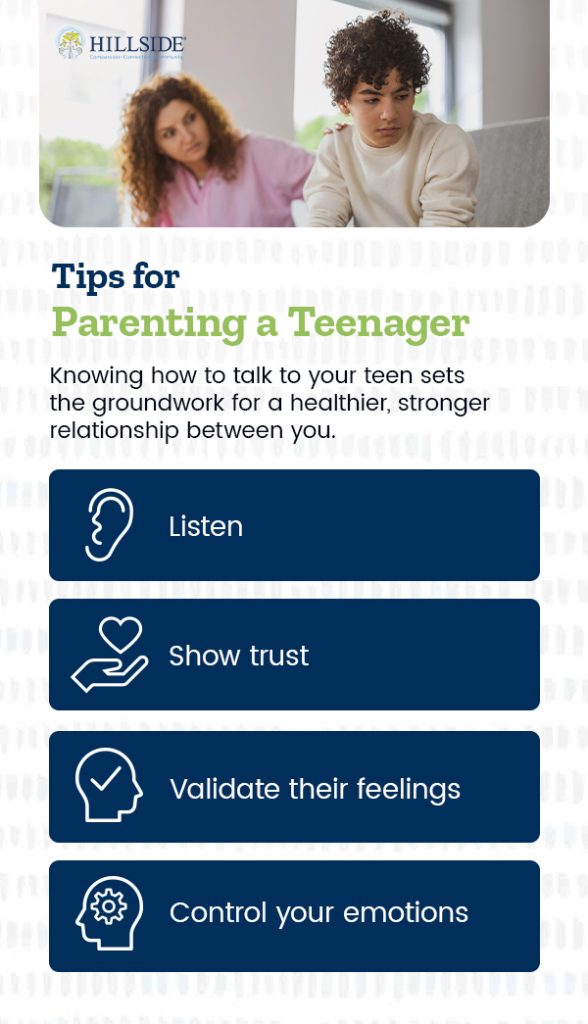
Knowing how to talk to your teen sets the groundwork for a healthier, stronger relationship between you. The following tips may also be helpful during this time:
1. Set Clear Boundaries and Expectations
Setting boundaries is an important part of helping teenagers gain independence and make good decisions. It also creates clarity between you and your child as you navigate these new changes. Be sure to discuss boundaries with all important authority figures before discussing them with your child to reduce confusion and highlight clear, firm expectations.
Your child’s level of independence, previous habits and experiences with siblings will shape the boundaries you set, and some boundaries may evolve over time. For example, a curfew for a 15-year-old will likely differ from that for your 17-year-old child. Some common boundaries include:
- Curfews for weekends and school nights
- Schedules for studying, homework and working
- Dating guidelines and expectations
- Family time, such as dinners or events
- Household responsibilities and chores
- Check-in processes when away from home
- Personal hygiene and healthy habits
Establish fair consequences and rewards to encourage positive behavior and reinforce rules. Consequences show your child that you mean what you say and that they must take responsibility for their actions. Rewards highlight your child’s progress and let them know you appreciate their actions. It’s important to follow through — if your child sees that they won’t receive consequences for breaking the rules, they may be more likely to push back again or ignore other boundaries.
2. Support Your Teen’s Emotional Well-Being
Adolescence is a formative time, but the many changes a child experiences can make them vulnerable to behavioral and mental health challenges. Worldwide, 1 in 7 children ages 10 to 19 experiences a mental health disorder. Anxiety and depression are the most common. Signs of mental health disorders vary. You likely have a strong understanding of what “normal” looks like for your child, and significant changes from regular patterns could indicate a developing or present mental health condition.
Some symptoms of emotional struggles include:
- Significant changes in eating, sleep or weight
- Quitting or losing interest in activities
- Canceling plans with family and friends
- More frequent or intense academic struggles
- Becoming obsessed with a specific goal
- Refusing to discuss what’s going on or bothering them
3. Understand How to Address Your Teen’s Mental Health
If your child exhibits a behavioral or mental health disorder, it’s important to express your love and support. Every situation is unique, and you will likely find that some strategies work better than others. Here are some general guidelines to help a teen with depression:
- Promote resilience: Resilience helps children develop a sense of control and buffers against stress by better equipping teens to cope with complex situations and manage depressive symptoms when they occur. You can promote resilience in your teen by encouraging self-compassion, problem-solving, proper body care and positive outlooks.
- Encourage coping: Healthy coping skills help teenagers regulate emotions and handle stress. Parents can encourage healthy coping by teaching problem-solving, encouraging them to ask for help, modeling healthy habits, and promoting creative and healthy outlets.
- Teach mindfulness: Mindfulness can be a gentle method for supporting a teenager with depression. Encourages your teen to be present in the moment without judging their experience as “good” or “bad.” This technique can help calm the mind and reduce stress, making it easier to handle complex emotions. Practice mindfulness together through everyday moments or guided videos and exercises. Techniques like box breathing, personal reflection, and connecting mindfulness to your child’s interests are great places to start.
- Discuss stress management: Studies find that stressful life events are linked to depressive episodes. Discussing stress management with your child can help them understand that stress is normal and equip them with techniques to better manage their symptoms. Common ways to reduce stress include engaging in physical activity, being creative, talking to a trusted friend, spending time outdoors and establishing healthy routines.
4. Be Mindful of Academic Pressure
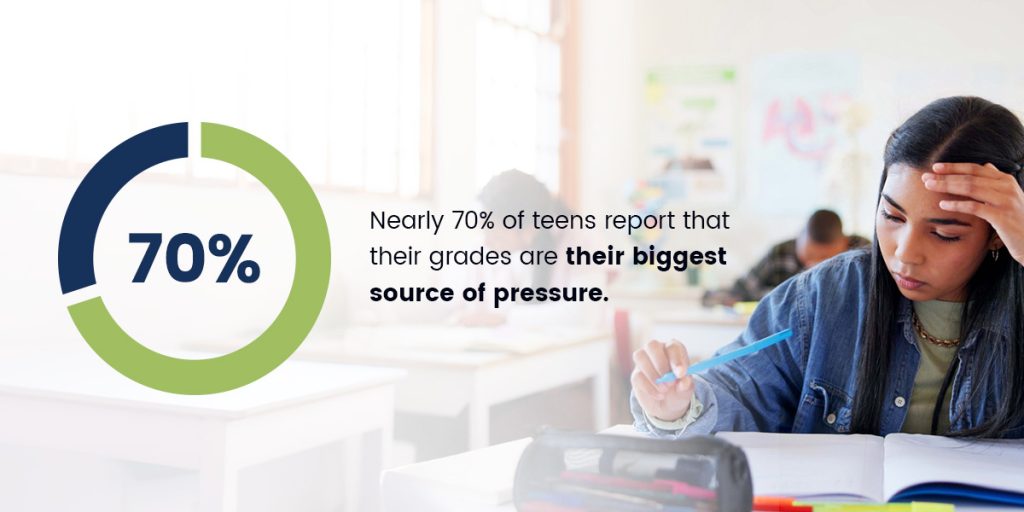
Nearly 70% of teens report that their grades are their biggest source of pressure. Academic pressure can stem from several causes, including:
- Parents or family: While parents often want their children to get good grades, encouragement can sometimes turn into pressure. Teenagers may struggle to feel confident in their work or like their best isn’t good enough.
- Heavy coursework: Heavy course loads can be a significant stressor. Teenagers must navigate multiple classes with different teachers and varying learning materials, building pressure across the board.
- Themselves: Sometimes, teenagers put pressure on themselves. They may feel like they’re in competition with their peers or themselves.
- External sources: Many external factors also influence academic pressures. For example, a student concerned about getting into a specific university may feel increased pressure. A student in a friend group that consistently earns high grades may feel pressure to perform at that same level.
5. Foster a Growth Mindset
One of the best ways to help your child navigate academic challenges is to encourage them to embrace a growth mindset. This fosters a love of learning by encouraging your teen to enjoy the act of trying and learning new things. Research finds that possessing a growth mindset makes teenagers more likely to seek challenges, respond to setbacks with constructive thoughts, and think more highly of their intellectual abilities.
You can encourage a growth mindset in your teen by normalizing mistakes, praising their efforts and supporting your child’s interests. Remind your teen that mistakes are normal and a natural part of learning. Rather than fearing failure, help them embrace opportunities to try again. Praising your child’s efforts in all endeavors highlights your support and shows them that the learning process can be fun and exciting. Supporting your child’s interests, even if they’re not immediately “good” at something, emphasizes the fun in learning rather than being the best.
6. Encourage Healthy Relationships
Positive friendships and healthy romantic relationships help adolescents develop into independent and well-functioning individuals. The relationships your child experiences in their teen years can set the tone for future partners and friends and impact the level of respect they hold for themselves. Though your child is growing more independent, you still play a vital role in shaping their views and actions. Sit down with your child to discuss the importance of:
- Respect: Teaching respect for others is a great way to help your child become kind, confident and responsible. Respecting others means setting appropriate boundaries and honoring other people’s own boundaries. Respecting others can help teens build deeper and more meaningful relationships by reducing risky behaviors, supporting mental health and laying the groundwork for supportive connections.
- Consent: Children grow at different paces and carry unique sets of values. Some teenagers feel more prepared for certain activities than others. It is critical to teach your child about consent for their safety and the safety of others. Be clear about what is and is not consent, including verbal and nonverbal cues. Discuss the potential impact of pressure and substance use on consent.
Survive and Thrive Through the Teenage Years With Hillside®
Parenting a teenager can be exciting and challenging at the same time, but consistently supporting your child and equipping them with the tools and techniques to be their best selves can make a monumental impact.
If you’re looking for ways to encourage your child’s growth and improvement, consider Hillside®. Whether your child is struggling during this transitional time or is showing signs of a mental or behavioral health challenge, we are here to help. Hillside’s residential treatment facility specializes in helping teens and families navigate mental health challenges. We design our programs to meet client needs at varying levels of intensity. Contact admissions today to request more information.